(Brussels, 3 May 2012)
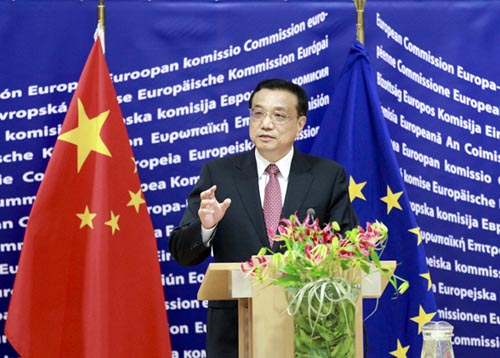
President Jose Manuel Barroso,
Ladies and Gentlemen,
Dear Friends,
It gives me great pleasure to attend the China-EU High Level Energy Meeting. This is an important meeting for upgrading China-EU practical cooperation in the energy field as it brings Chinese and EU ministers together for broad and in-depth discussions on China-EU energy cooperation, especially in the areas of new, renewable and clean energy. This is thus of great significance for stronger practical cooperation between China and the EU. Before this meeting, I had talks with President Barroso and we reached much important agreement on deepening China-EU relations and advancing China-EU practical cooperation in all areas, energy included. Here, I wish to extend warm congratulations on the successful convening of this meeting and express heartfelt thanks to people from various sectors who have long been dedicated to the development of China-EU relations and energy cooperation.
China-EU energy cooperation needs to be viewed in the broader context of the global energy and economic situation. The world economy is showing signs of recovery, but the underlying impact of the international financial crisis still lingers and the world economy is undergoing profound adjustments and changes. On the one hand, a new round of scientific and technological innovation in the energy field is thriving. The development of new energy industries is picking up pace and important progress has been made in the development and utilization of non-conventional oil and gas resources, such as shale gas. On the other hand, the international oil prices remain high and volatile, and the imbalance between global energy supply and demand has become more acute. The world energy markets are complex and volatile.
As the biggest group of developed countries, the European Union leads the world in technological innovation and structural adjustment in the energy sector. In recent years, EU countries have made vigorous efforts and achieved encouraging progress in developing new and renewable energies, exploring and employing low-carbon technologies and responding to climate change. The goals of increasing the share of renewable energy to 20% and raising energy efficiency by 20% by 2020 reflect the EU's strategic insight.
As one of the major economies and the biggest developing country in the world, China attaches great importance to energy supply and security, as energy provides the basic conditions for economic and social development. We have implemented a conservation-first energy strategy, relied on our own resources to increase energy supply, continued to improve the energy mix and engaged in active international energy cooperation for mutual benefit and win-win results. Over the past six years, China's energy consumption per unit of GDP has come down by 21%. China now ranks the first in the world in terms of installed hydropower and wind power generation capacity. Going forward, China will continue to shift the way in which energy is produced and utilized and keep overall energy consumption at a reasonable level. During the 12th Five-Year Plan period, China's energy intensity will be cut by a further 16% and the share of non-fossil fuel in total energy consumption will reach 15% by 2020. We are working tirelessly towards these goals.
China-EU energy cooperation already has a good foundation. Mechanisms for inter-governmental energy exchanges and cooperation have kept improving, energy cooperation between enterprises has become more dynamic and China-EU joint participation in third-party energy cooperation has made positive progress. Right after this closing ceremony, the two sides will sign the joint declaration on China-EU urbanization partnership, the joint declaration on energy security and the joint statement for enhanced cooperation on electricity markets, and announce the establishment of a China-EU strategic energy consumer partnership. This will mark the beginning of a new stage in China-EU energy cooperation.
The huge potential of China-EU energy cooperation lies in urbanization, new energy, energy conservation and environmental protection. Urbanization has the greatest potential for driving China's domestic demand, and the serious constraints posed by resources and the environment make energy conservation and environmental protection a key measure for achieving sustainable development in China. During the 12th Five-Year Plan period, China's urbanization rate will rise by about four percentage points, which means over 50 million people will move from rural areas to cities and townships. China's energy conservation and environmental protection sector will grow to around 15 trillion RMB yuan in output value, providing a broad market for the development of new energy and great potential for the development and application of renewable energy in both urban and rural areas. Europe leads the world in the field of new energy, energy conservation and environmental protection and it has a strong edge in energy science and technology. During my visit to Europe early last year, I saw electric cars, renewable energy-compatible smart grid, energy efficient buildings and wave power generation projects. I was deeply impressed by Europe's advanced technologies. We have a lot to offer each other as strategic partners by combing our respective strengths in urbanization, new energy, energy conservation and environmental protection.
Looking ahead, China and the EU should open market wider to each other, expand technological exchanges and cooperation, strengthen IPR protection and deepen practical cooperation. We should pursue cooperation in R&D, equipment manufacturing, engineering and industrialization concerning new and renewable energy, step up exchanges for ensuring the safe use of nuclear energy, and make innovation together in low-carbon cities, green building and promoting energy efficiency in industries and the transportation sector. We hope that the EU will be more open and flexible on transferring high technologies to China to connect Europe's leading technologies with China's huge market for mutual benefit and win-win results.
As two important economies in the world, China and the EU both have the task of ensuring energy security and the responsibility of maintaining the stability of global energy markets. The high dependency of China and EU countries on external energy supply raises the need for closer cooperation in diversifying energy sources and enhancing energy security. China and the EU should strengthen experience sharing in the formulation and implementation of energy strategy, jointly train young professionals in the energy field and work together to build a safe, stable, efficient and clean modern energy industry. The complex and volatile international situation makes it imperative for us to participate in global energy governance. We should step up policy coordination, promote the building of an open and efficient international energy market with fair competition, facilitate the establishment of a rational energy pricing system and make joint efforts towards sustainable world energy development.
Ladies and Gentlemen,
Rational and efficient use of energy and tireless exploration for the right path to energy development are important symbols of human progress. Closer energy cooperation provides an important foundation for ensuring energy security. To deepen energy cooperation between China and the EU will help expand China-EU practical cooperation and grow China-EU strategic cooperative relations. It will better serve the interests of the people of China and Europe and make greater contribution to world peace, development and progress.
Thank you.