


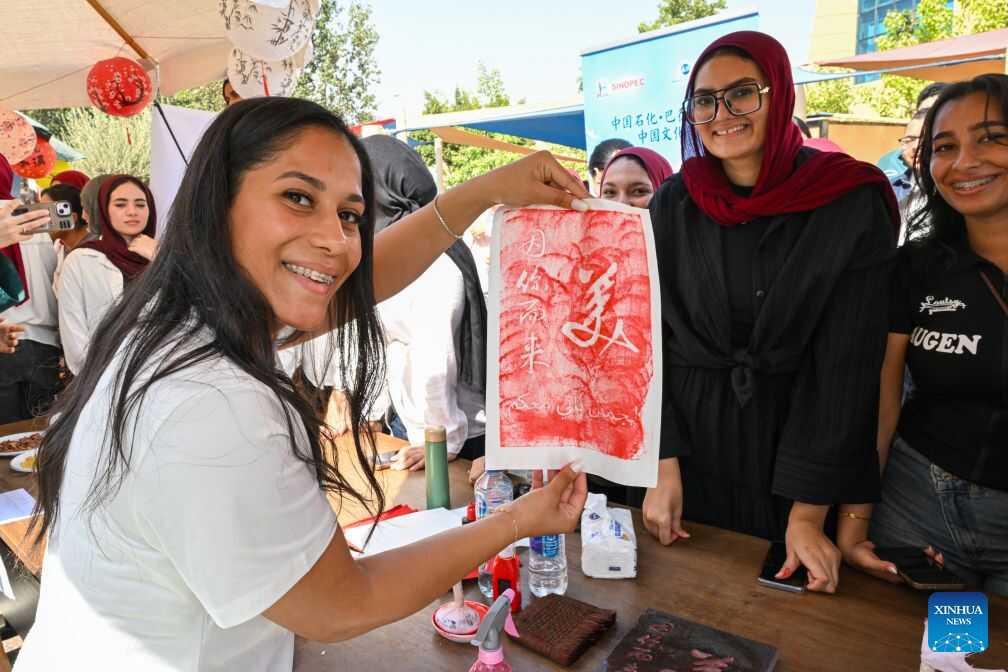
A visitor experiences Chinese rubbing during a Chinese culture festival at Badr University in Cairo, Egypt, Oct. 12, 2026. A Chinese culture festival was held Monday at Badr University in Cairo to celebrate the 70th anniversary of the establishment of diplomatic relations between China and Egypt, featuring cultural performances, traditional Chinese arts and student exchanges. (Xinhua/Xin Mengchen)
CAIRO, Oct. 12 (Xinhua) -- A Chinese culture festival was held Monday at Badr University in Cairo to celebrate the 70th anniversary of the establishment of diplomatic relations between China and Egypt, featuring cultural performances, traditional Chinese arts and student exchanges.
Lu Chunsheng, minister counselor at the Chinese Embassy in Egypt, expressed hope that young people would take the opportunity to gain a deeper understanding of Chinese enterprises and culture and play an active role in strengthening China-Egypt friendship.
The Chinese Embassy in Egypt stands ready to work with the Egyptian side to implement the important consensus reached by the leaders of the two countries, further expand cooperation in Chinese language teaching, education and scientific research, strengthen exchanges of teachers and students, enhance mutual understanding, and deepen mutual learning between civilizations, Lu said.
Amr Elatraby, vice president of Badr University in Cairo, said lasting friendship between nations requires not only political mutual trust and economic cooperation, but also exchanges in education, culture and among young people.
He said the university attaches great importance to Chinese language education and educational cooperation with China, adding that the festival provides an opportunity for young people from both countries to interact face to face, enhance mutual understanding and strengthen their friendship.
Wei Dong, chief representative of Sinopec Africa Office, said Sinopec remains committed to localized operations and fulfilling its corporate social responsibility by supporting education, cultural activities and community development in Egypt.
"The cultures of Egypt and China have their own unique characteristics, and cultural exchanges have enriched my life," Salma Hamada, a Chinese language student at Badr University, told Xinhua.
She said young people from the two countries now have more opportunities to understand each other and are increasingly willing to share their cultures with openness and friendship.
"Chinese tea culture, dance and traditional opera are all fascinating. I really enjoyed this event," said Tasneem Ismil, another Chinese language student at the university who took part in a Chinese dance performance.
She noted that the growing number of Chinese cultural activities in Egypt has given local students more opportunities to showcase their language skills and experience Chinese culture firsthand.
Organized by Sinopec and Badr University under the guidance of the Chinese Embassy in Egypt, the festival brought together Egyptian students from the university's Chinese language department and Chinese students from Beijing Language and Culture University and Heilongjiang University.
Students performed poetry recitations, songs, dances and short plays, showcasing their language skills and experiences in cultural exchange.
The event also featured interactive booths offering Chinese calligraphy, paper-cutting, traditional costumes, tea ceremonies and Chinese cuisine, attracting enthusiastic participation from Egyptian students.
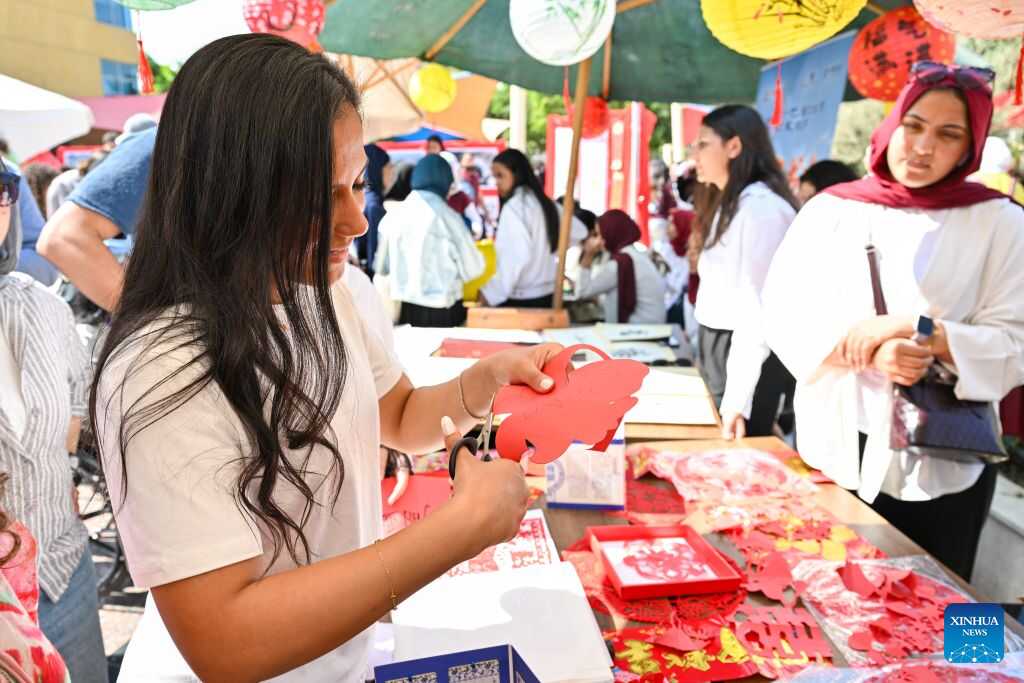
A visitor experiences paper-cutting during a Chinese culture festival at Badr University in Cairo, Egypt, Oct. 12, 2026. A Chinese culture festival was held Monday at Badr University in Cairo to celebrate the 70th anniversary of the establishment of diplomatic relations between China and Egypt, featuring cultural performances, traditional Chinese arts and student exchanges. (Xinhua/Xin Mengchen)
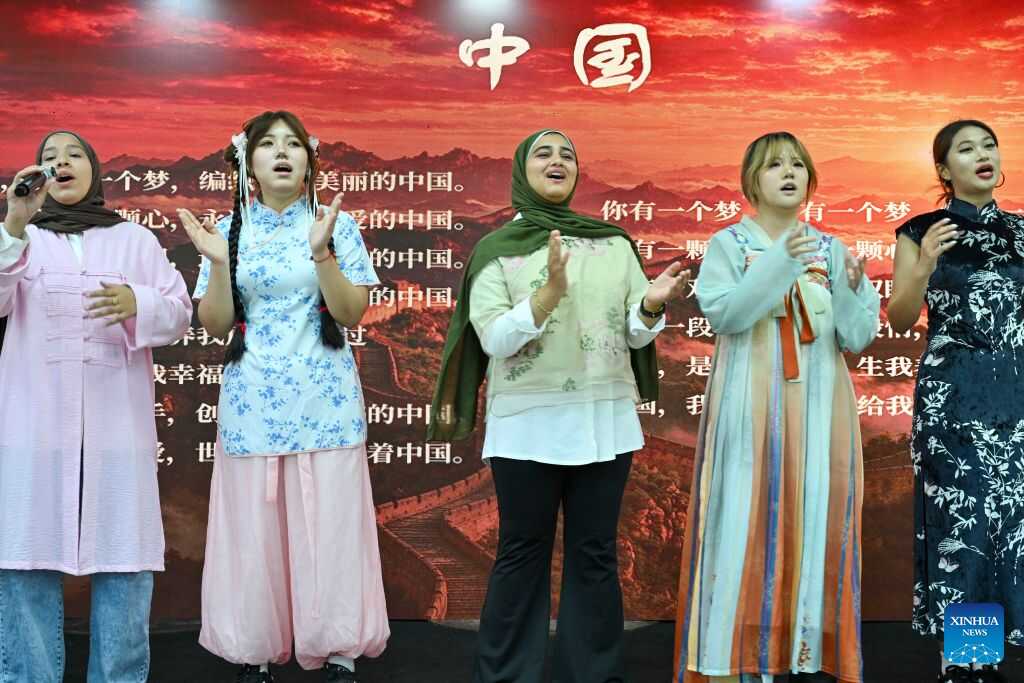
Students sing a Chinese song during a Chinese culture festival at Badr University in Cairo, Egypt, Oct. 12, 2026. A Chinese culture festival was held Monday at Badr University in Cairo to celebrate the 70th anniversary of the establishment of diplomatic relations between China and Egypt, featuring cultural performances, traditional Chinese arts and student exchanges. (Xinhua/Xin Mengchen)
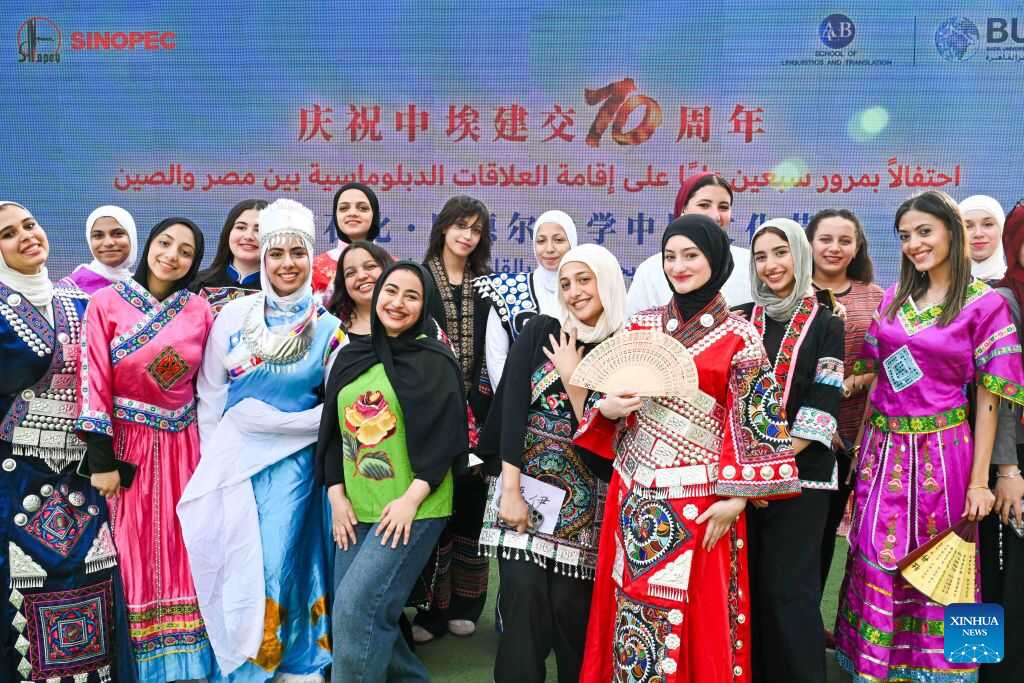
Egyptian students pose for a group photo during a Chinese culture festival at Badr University in Cairo, Egypt, Oct. 12, 2026. A Chinese culture festival was held Monday at Badr University in Cairo to celebrate the 70th anniversary of the establishment of diplomatic relations between China and Egypt, featuring cultural performances, traditional Chinese arts and student exchanges. (Xinhua/Xin Mengchen)
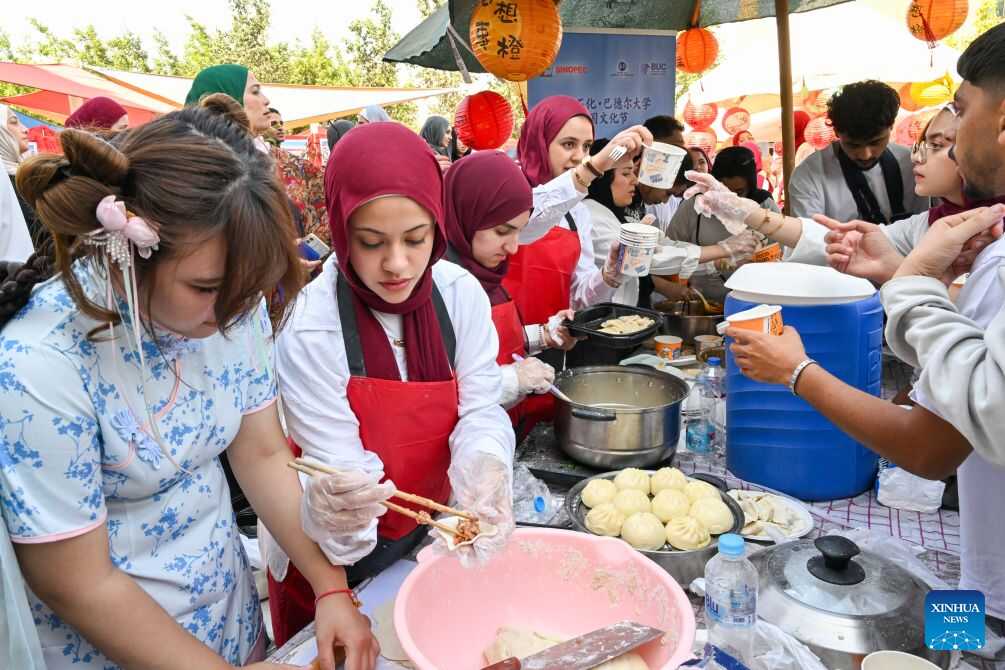
Students prepare Chinese snacks for visitors during a Chinese culture festival at Badr University in Cairo, Egypt, Oct. 12, 2026. A Chinese culture festival was held Monday at Badr University in Cairo to celebrate the 70th anniversary of the establishment of diplomatic relations between China and Egypt, featuring cultural performances, traditional Chinese arts and student exchanges. (Xinhua/Xin Mengchen)
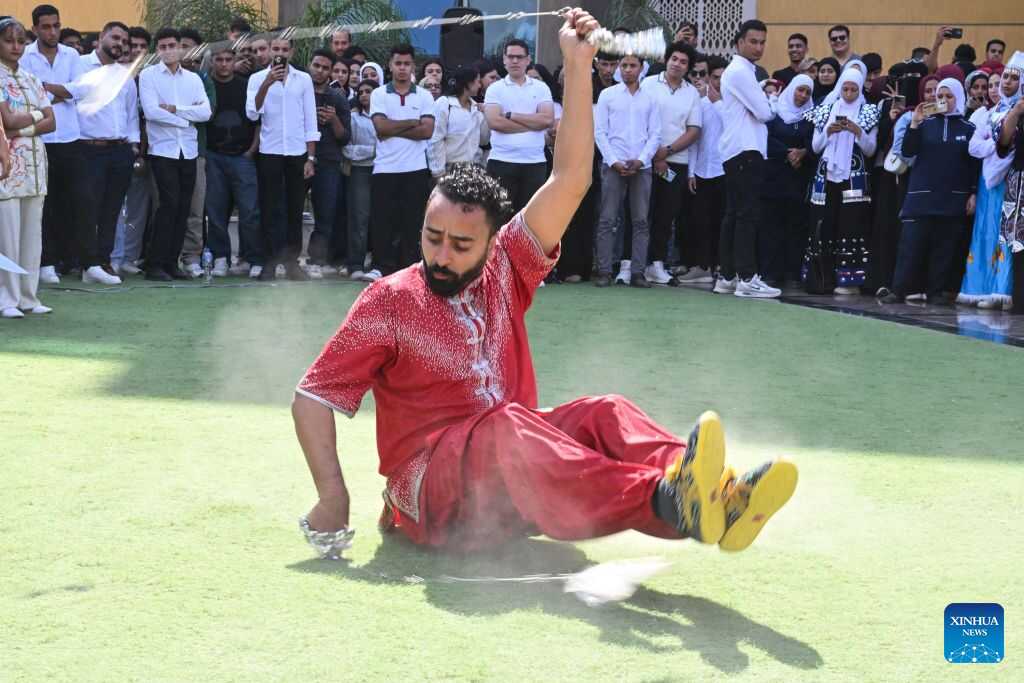
An Egyptian student performs martial arts during a Chinese culture festival at Badr University in Cairo, Egypt, Oct. 12, 2026. A Chinese culture festival was held Monday at Badr University in Cairo to celebrate the 70th anniversary of the establishment of diplomatic relations between China and Egypt, featuring cultural performances, traditional Chinese arts and student exchanges. (Xinhua/Xin Mengchen)
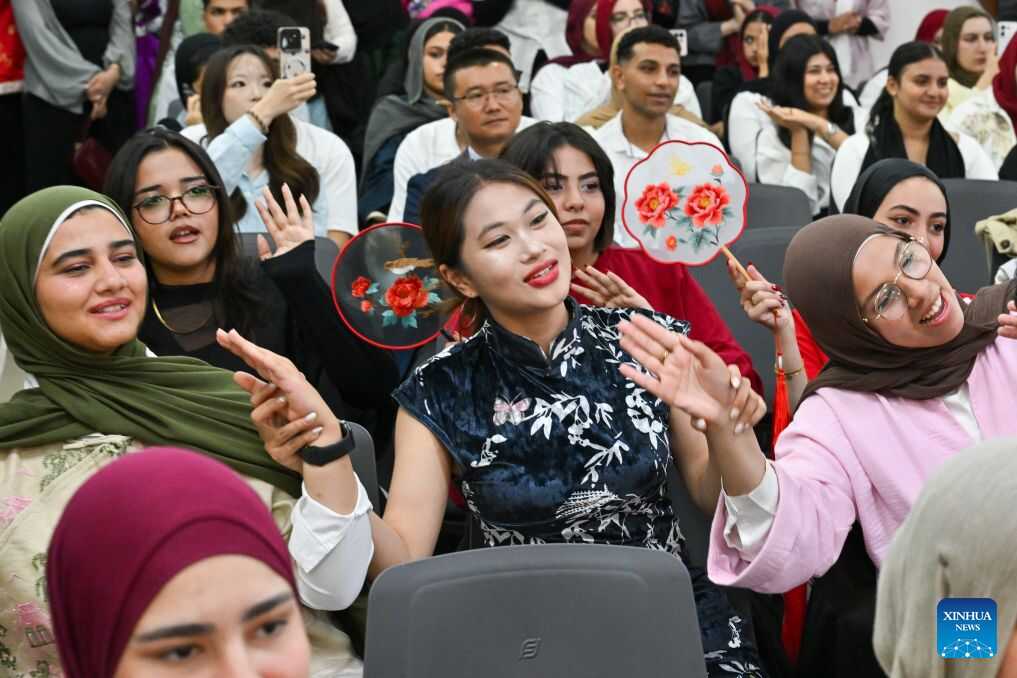
People watch a performance during a Chinese culture festival at Badr University in Cairo, Egypt, Oct. 12, 2026. A Chinese culture festival was held Monday at Badr University in Cairo to celebrate the 70th anniversary of the establishment of diplomatic relations between China and Egypt, featuring cultural performances, traditional Chinese arts and student exchanges. (Xinhua/Xin Mengchen)